Before sunrise, Eunice Gerefiyodi, 31, is already at work outside her house in Chaseta Village, Traditional Authority Kambwiri in Salima District.
Seated on a reed mat, she carefully weaves wicker baskets, flowerpots and serving trays while her three children prepare for school.
The offerings around her will soon be sold, earning income that feed her family and keep the children in school.
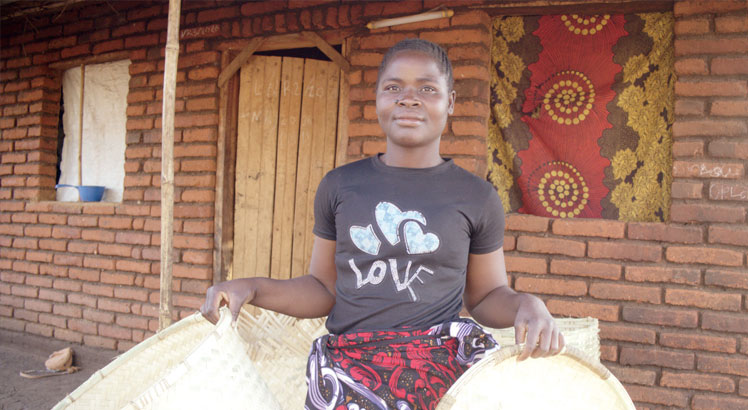
After separating from her husband, Gerefiyodi was left to raise her three children alone at a time her crop yields kept dwindling because she could not afford farm inputs, including fertiliser.
Today, she speaks with renewed confidence.
Income from bamboo products, together with proceeds from her village savings and loans (VSL) group, helped her invest in farming for improved food security.
Last season, she harvested 14 bags of maize after buying fertiliser through her earnings.
“My next goal is to replace the grass roof on my house with iron sheets,” she says.
Gerefiyodi is among more than 2 000 people benefiting from the Bamboo Value Chain Project by Green Livelihoods in Salima and Dowa districts.
Since September 2024, the initiative, funded by In Their Lifetime in partnership with Christian Aid Malawi, has trained communities in bamboo processing, enterprise development, financial management, digital marketing and market access.
The transformation in Gerefiyodi’s household echoes how the project has empowered families to earn income beyond seasonal farming.
Members of Chikondi Club, who once regarded bamboo as a plant with little value, now fashion chairs, tables, television stands, flower pots, baskets and beehives for sale beyond their community.
“For years we overlooked bamboo because we did not realise its value,” says club secretary Luciano James.
The project combines bamboo processing, modern beekeeping and VSLs into a single livelihood model.
Members save income from bamboo products and honey through VSL groups, allowing them to invest in farming, business expansion, school expenses and household needs.
The approach also promotes environmental stewardship.
“Sustainable harvesting ensures a continuous supply of bamboo while healthy bamboo forests provide ideal habitats for bees and reduce pressure on timber resources,” says James.
Participating communities in the two districts now manage about 490 beehives, including 174 bamboo hives.
Each hive produces 10 to 15 kilogrammes of honey every six months.
Between January and December 2025, groups harvested more than 700 kilogrammes from 53 beehives, generating about K8.5 million in sales. Bamboo enterprises have also generated approximately K10.6 million since the project began.
Last year, 43 VSL groups collectively saved and shared approximately K18.7 million, enabling members to respond to emergencies, invest in agriculture and strengthen small businesses.
“This initiative demonstrates that bamboo is not just an environmental resource, but also a viable business opportunity capable of transforming livelihoods, especially for women and youth,” says Salima district commissioner Thokozile Munthali.
Access to larger markets remains a challenge, but the project promotes digital marketing, trade fairs and stronger links with buyers.
In Dowa District, Msipe Bamboo Group chairperson Hamilton Chirombo says participation in national exhibitions and digital marketing—via Facebook and WhatsApp—has helped members reach customers across Malawi and neighbouring Zambia.
“Access to markets is as important as the ability to manufacture quality products,” he says.
Back in Chaseta Village, Gerefiyodi places another finished basket beside those queued for sale.
Each morning she returns to the reed mat, weaving products that help feed her family, educate her children and bring her closer to achieving the undying dream of replacing her grass-thatched hut with decent housing.
Every basket she weaves is another step towards a better future for her children and proof that with the right skills and opportunities, an overlooked resource can become the foundation of lasting hope.